
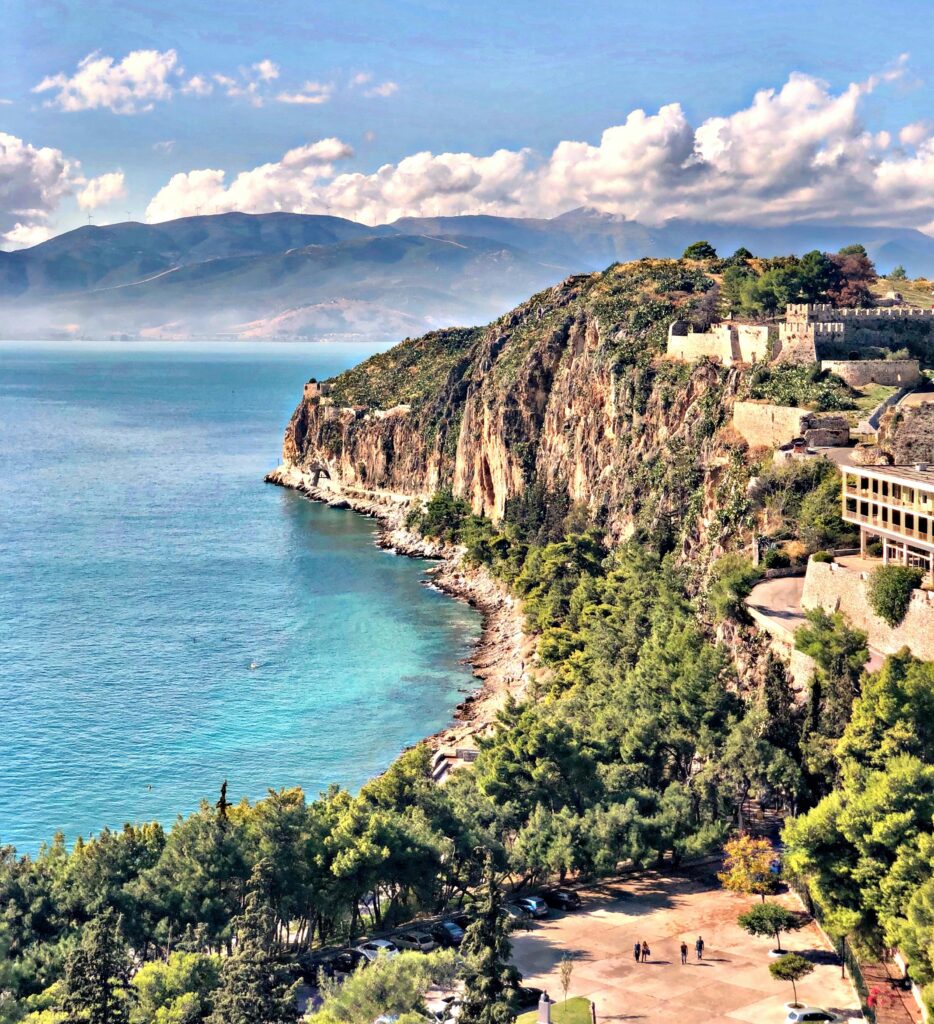
Short-term rental beds in Argolida, in the Peloponnese, now outnumber hotel beds by roughly half again. Until now that has been a statistic without consequences, because Greek tourism planning counted only hotel capacity when assessing how heavily developed an area is.
Greece’s new spatial framework for tourism changes that. It will count short-term rental beds toward each area’s carrying capacity — and areas that cross the threshold can face limits on bed numbers, suspension of new registrations, or geographic restrictions. This is how a market with no restrictions today acquires them.
How fast have Peloponnese short-term rentals grown?
Rental days in the Peloponnese rose from 112,970 in 2020 to 466,094 in 2025, an increase of 312.6% over five years.
Growth has continued into the most recent year at 6.1%, from 439,489 days in 2024 — ahead of the national rate of 4.7%. The Peloponnese is now the sixth-largest region in Greece by registered short-term rental properties, with 13,349 recorded in the tax authority’s registry as of March 2026, behind Attica, Central Macedonia, the South Aegean, Crete and the Ionian Islands.
Do short-term rentals outnumber hotels in Argolida?
Argolida has 16,161 short-term rental beds against 10,816 hotel beds across 148 hotel units, meaning rental capacity exceeds hotel capacity by around 49%.
Across the Peloponnese as a whole the ratio is 1.68 short-term rental beds for every hotel bed, with 68,910 rental beds against 40,929 hotel beds. Short-term rental is no longer a supplement to the hotel sector in this region. It is the larger half of the accommodation stock.
Accommodation capacity compared
| Area | Short-term rental beds | Hotel beds | Ratio |
|---|---|---|---|
| Argolida | 16,161 | 10,816 | 1.49 : 1 |
| Peloponnese region | 68,910 | 40,929 | 1.68 : 1 |
Why does the bed count suddenly matter?
Greece’s new spatial framework for tourism will include short-term rental beds when calculating an area’s tourist carrying capacity, where previously only hotel beds were counted.
The framework sorts every municipal unit in Greece into categories based on the ratio of tourist beds to permanent residents, from controlled development areas — the most restricted, currently Mykonos, Santorini, Skiathos and parts of Rhodes, Corfu and Crete — down to early development areas that receive incentives rather than limits.
Where an area is classified as heavily developed, the framework creates powers to cap the number of beds, suspend new registrations, or impose geographic zones where short-term rental is limited or prohibited. These are enabling powers rather than automatic restrictions, but they are the same mechanism already used to freeze new registrations in central Athens and central Thessaloniki.
The arithmetic is straightforward. If an area’s tourist capacity was previously measured at 10,816 beds and is now measured at nearly 27,000, its position on that scale changes substantially without a single new building being constructed.
Which parts of the Peloponnese are most exposed?
The areas with the highest concentration of short-term rental beds relative to permanent population are the most exposed, which in Argolida means Nafplio and the coastal municipalities including Ermionida, the area containing Porto Heli, Kranidi and Ermioni.
Official statistics stop at regional level, so the precise municipal breakdown is not published. What is known is that the region as a whole is carrying 68,910 rental beds, that growth has run at over 300% in five years, and that the framework’s classification works on exactly the ratio this shift changes.
Ermionida is also the site of over €1 billion in announced luxury hotel investment, including Four Seasons, Six Senses and Waldorf Astoria projects. Those hotel beds count toward carrying capacity as well.
Is the Peloponnese a domestic or international market?
Foreign guests accounted for 334,934 of the Peloponnese’s 466,094 rental days in 2025, or roughly 72%, compared with over 84% nationally.
This makes the Peloponnese meaningfully more domestic than the Greek average, which reflects its accessibility by road from Athens. Around 28% of rental days came from Greek guests, against under 16% nationally. For owners, that means Greek-market demand — weekends, holidays, domestic summer traffic — is a materially larger share of the business here than it is in the islands or the major cities.
What should owners in the Peloponnese do now?
Nothing about the framework restricts short-term rental in the Peloponnese today, and existing registrations are not affected by any of the freezes currently in force elsewhere in Greece.
The practical point is about sequencing. In both Athens and Thessaloniki, the pattern was the same: rapid growth, a bed-count threshold crossed, then a freeze on new registrations — with existing licences protected and new entrants locked out. Owners who registered before the freeze found their position strengthened. Owners who waited found the door closed.
Anyone considering a short-term rental in Argolida, Ermionida or elsewhere in the Peloponnese should also note that a registration is now harder to replace than it used to be. Under current rules, a licence does not transfer automatically when a property changes hands, so in any area that later comes under restriction, an existing registration becomes an asset in its own right.
Frequently asked questions
How many short-term rentals are there in the Peloponnese?
13,349 properties were registered in the Greek tax authority’s short-term rental registry for the Peloponnese region as of March 2026, making it the sixth-largest region in Greece.
How fast is the Peloponnese short-term rental market growing?
Rental days grew 312.6% between 2020 and 2025, reaching 466,094 days, with 6.1% growth in the most recent year against a national rate of 4.7%.
Are there more Airbnbs than hotels in Argolida?
Argolida has 16,161 short-term rental beds against 10,816 hotel beds in 148 hotel units, so rental capacity exceeds hotel capacity by around 49%.
Will Greece restrict short-term rentals in the Peloponnese?
No restrictions apply there currently, but Greece’s new spatial framework for tourism creates powers to cap beds or suspend new registrations in areas assessed as heavily developed, and it will count short-term rental beds toward that assessment for the first time.
Can you still register a new short-term rental in Argolida or Ermionida?
Yes — the registration freezes in force apply to central Athens and the Α΄ Municipal Community of Thessaloniki, not to the Peloponnese.
Are guests in the Peloponnese Greek or foreign?
Around 72% of rental days in 2025 were by foreign guests and 28% by Greek guests, a considerably more domestic mix than the national average of 84% foreign.
About this data
Rental day and registration figures are from the Hellenic Statistical Authority’s experimental statistic on short-term rental accommodation operating through digital platforms, covering 2019 to 2025, with registry counts reflecting the position in March 2026. Bed capacity comparisons are from INSETE, the Greek Tourism Confederation’s research institute, for 2024. Framework provisions are from the Special Spatial Framework for Tourism published by the Greek Ministry of Environment. Official statistics are published at regional level; municipal breakdowns for Ermionida, Nafplio and other areas of Argolida are not publicly available.
Related: Porto Heli, Greece: The Ermionida Property Market, Greece Airbnb Regulations 2026, Greece’s Short-Term Rental Slowdown.
Greek BnB Data provides insights for property owners and investors across Greece. Brothers Consulting manages short-term rental properties in Porto Heli, Ermionida, Argolida and Thessaloniki, Greece.