
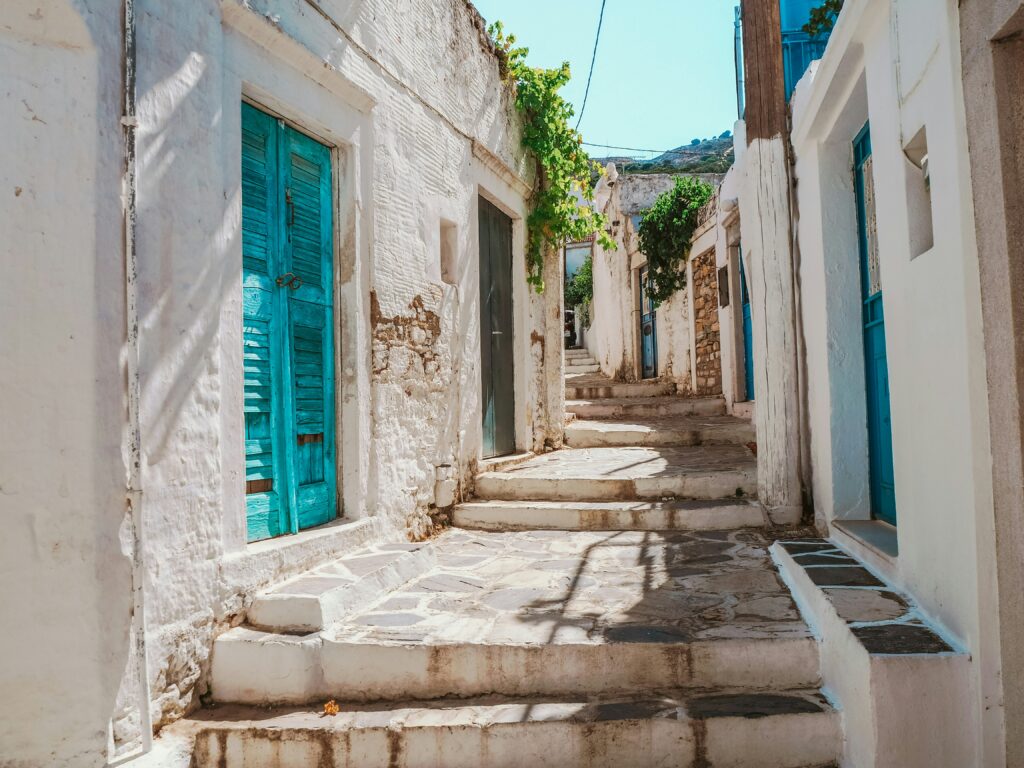
A guest slips on a poorly lit staircase. A railing gives way because it was never properly maintained. A faulty electrical socket causes a fire. None of these are hypothetical for a Greek short-term rental host — and the financial exposure from a single serious injury can exceed an entire season’s income.
Since 1 October 2025, Greek law requires short-term rental hosts to carry liability insurance. Understanding why matters more than simply ticking the compliance box.
Is a host automatically liable if a guest is injured?
No — a guest being injured inside a property does not by itself make the host liable. Greek civil liability law requires proof of unlawful and negligent conduct or omission by the host, actual damage, and a causal link between the two.
In practice this means there is a real difference between a guest injured purely through their own carelessness, and a guest injured because part of the property was genuinely hazardous and the host had failed to fix it. The specific facts of each case determine which applies.
Why does Greek law now require liability insurance?
Article 3 of Law 5170/2025, in force since 1 October 2025, requires short-term rental properties to carry liability insurance against damage or accidents, alongside other mandatory safety measures: fire extinguishers, smoke detectors, a certified electrician’s declaration, earth leakage or anti-electrocution circuit breakers, and emergency exit signage.
The financial logic behind the requirement is straightforward. Compensation for a serious injury can include property damage directly linked to the injury, and under Article 932 of the Greek Civil Code, courts may additionally award compensation for moral damage in tort cases — meaning the total award in a serious case can run into hundreds of thousands of euros, far beyond what a season of bookings would generate.
Does home insurance cover short-term rental use?
Not automatically — a standard home insurance policy that has covered a property for years against fire, flood or earthquake does not necessarily continue to apply in the same way once the property starts hosting paying guests, because short-term rental materially changes how the property is used.
This is the single most commonly overlooked risk. The relevant question isn’t whether the policy exists, but whether that specific policy covers the property under its actual current use. Law 5170/2025 only mandates liability insurance for injury or accident claims — it does not require insurance protecting the owner’s own property, which means separate contents and building cover for short-term rental use is optional and needs to be checked and arranged deliberately, not assumed.
Does Airbnb’s Host Damage Protection cover this?
Airbnb’s Host Damage Protection can cover eligible damage to a host’s home and belongings caused by guests, up to 3 million US dollars under the platform’s terms — but it is explicitly not an insurance policy and does not replace insurance the host may need.
Airbnb’s own terms describe it as a conditional guarantee rather than an insurance contract. Claims must be submitted through the Resolution Center within 14 days of the responsible guest’s departure, with supporting documentation. For hosts, the practical implication is to photograph and document a property’s condition before every stay, since a claim depends on being able to demonstrate both that damage occurred and its extent.
What if a guest damages a neighbouring property?
Liability for damage extending beyond the rented property itself — a guest leaving a tap running that floods the apartment below, or a fire that spreads to a neighbouring property — still follows the general principle: responsibility depends on who caused the damage, through what conduct, and whether there was fault.
Where the damage results solely from the guest’s own conduct, the fact that they were staying in someone else’s property does not automatically shift full responsibility to the owner. The analysis becomes more complex where the damage is connected to poor maintenance or a defective installation the owner was responsible for — in that scenario, host liability becomes a live question rather than a formality.
What should hosts actually do?
Four things reduce real exposure rather than just satisfying the paperwork requirement: confirm the liability insurance required from 1 October 2025 is genuinely in place and adequate, separately check whether the property’s own contents and building insurance still applies under short-term rental use, fix known hazards — loose railings, poor stair lighting, faulty wiring — before they cause an incident rather than after, and photograph the property’s condition before every single stay.
The mandatory insurance requirement is, in most cases, an administrative burden. In the case where something genuinely goes wrong, it is the difference between a manageable claim and a liability that can exceed years of rental income.
Frequently asked questions
Is a host in Greece automatically responsible if a guest gets hurt?
No. Liability requires proof of negligent conduct or omission by the host, actual damage, and a causal link between them — an injury caused solely by guest carelessness does not automatically make the host liable.
Is liability insurance mandatory for Greek Airbnbs?
Yes, since 1 October 2025 under Article 3 of Law 5170/2025, alongside other safety requirements including fire extinguishers, smoke detectors and an electrical safety certificate.
Does my regular home insurance cover Airbnb guests?
Not automatically. Short-term rental changes how a property is used, and existing home insurance policies need to be checked to confirm they cover that use rather than assumed to apply unchanged.
Is Airbnb’s Host Damage Protection the same as insurance?
No. Airbnb’s own terms describe it as a conditional guarantee, not an insurance contract, and it does not replace insurance a host may need.
How quickly must a damage claim be filed with Airbnb?
Within 14 days of the responsible guest’s departure, submitted through Airbnb’s Resolution Center with supporting documentation.
About this article
This article is based on Greek legal reporting published 16 August 2026 summarising liability principles under the Greek Civil Code and the insurance requirements of Article 3, Law 5170/2025. It is general information, not legal advice, and Greek BnB Data is not a law firm or insurer. Confirm your specific insurance coverage and legal position with a licensed insurer and a Greek lawyer.
Related: How Airbnb Income Is Taxed in Greece, Can a Building Regulation Ban Airbnb in Greece?.
Greek BnB Data provides insights for property owners and investors across Greece. Brothers Consulting manages short-term rental properties in Porto Heli, Ermionida, Argolida and Thessaloniki, Greece.