
If you own or manage an Airbnb in Thessaloniki, the new Airbnb regulations for 2026 bring significant changes that affect your ability to operate — and your property’s value.
Greece has introduced a new regulatory framework for short-term rentals, with restrictions that are tightening every year. Here’s everything you need to know.
Airbnb regulations Thessaloniki 2026 — the license freeze
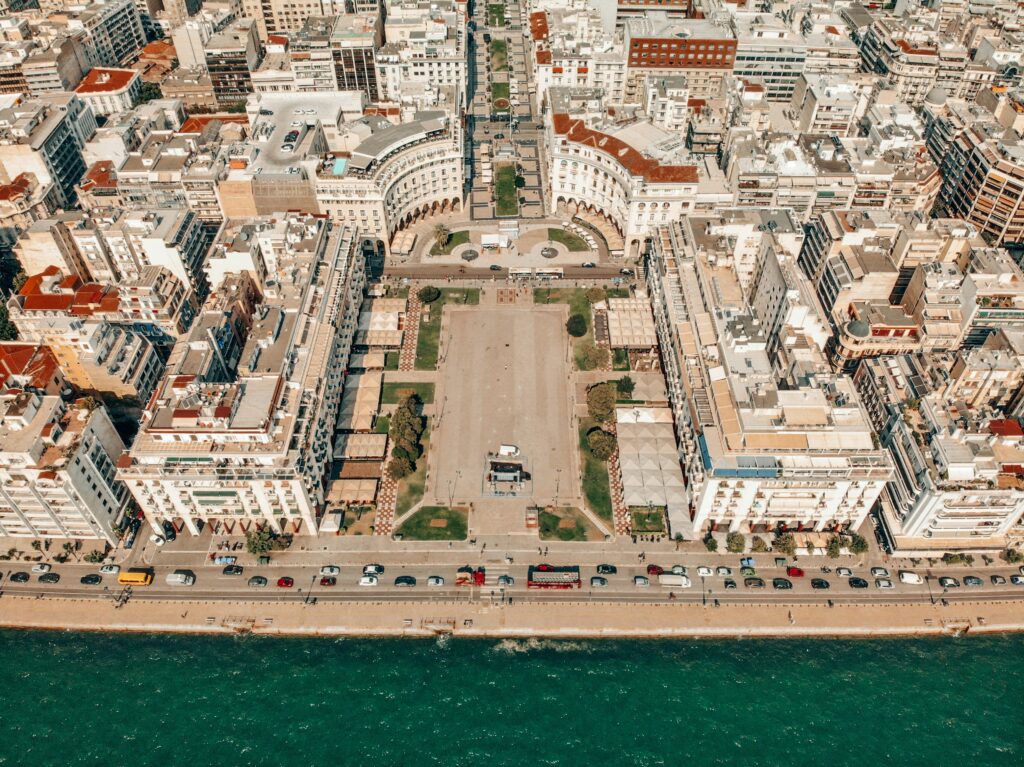
Since March 1, 2026, no new Airbnb licenses are being issued in the Α’ Δημοτική Κοινότητα (First Municipal Community) of Thessaloniki — the historic, commercial and tourist center of the city.
This follows the model already applied in central Athens since 2025, where similar restrictions cover three municipal districts.
The numbers explain why the government acted. Out of approximately 7,500 short-term rental registrations in the entire municipality of Thessaloniki, 4,800 — that’s 64% — are concentrated in this single zone. Registrations nearly doubled between 2022 and 2024.
The freeze applies for all of 2026, with the possibility of extension into future years.
The license transfer trap
This is the change that catches most property owners by surprise.
If you own a property in the restricted zone and you sell it, gift it, or pass it on through inheritance — the Airbnb license is automatically cancelled. The new owner cannot apply for a new one.
This means that in restricted areas, an Airbnb license no longer adds value to a property sale. Buyers who planned to run a short-term rental will be blocked from doing so.
If you are considering selling a property with an active Airbnb license in central Thessaloniki, this is a significant factor in your negotiation.
New property standards — in force since October 2025
Separate from the license freeze, Greece introduced new mandatory standards for all short-term rental properties under Law 5170/2025, effective October 1, 2025.
All registered properties must now have natural lighting, ventilation and air conditioning. The legality of the space must be proven through a building permit or urban planning compliance documentation.
Fines for non-compliance are significant. A first offense carries a €5,000 fine. Repeat offenses can reach €20,000.
These rules apply to all short-term rentals across Greece — not just in restricted zones.
What this means for investors and hosts
The regulatory picture is clear: the Greek government is tightening short-term rental rules every year, and Thessaloniki is following Athens.
For existing hosts in the restricted zone, nothing changes immediately — you can continue operating. But your license no longer transfers with your property, which affects its resale value.
For anyone looking to start a new Airbnb in Thessaloniki, the central neighborhoods are now closed. The opportunity has shifted to areas outside the restriction zone.
The good news is that several of these areas are genuinely attractive. Kalamaria, Ippokratio, Charilao, Toumpa and Analipsi are established, desirable neighborhoods — and most have direct metro access to the city center, with the Thessaloniki metro opening in 2025.
The restriction has effectively redirected investor interest toward these areas, which may drive growth in short-term rental activity there over the coming years.
About this data
Regulatory information in this article is based on Law 5170/2025 and subsequent government announcements regarding short-term rental restrictions in Thessaloniki and Athens.
For data on Airbnb earnings and occupancy rates across Thessaloniki neighborhoods, see our analysis: How Much Can You Make from an Airbnb in Thessaloniki.
Greek BnB Data provides insights for property owners and investors across Greece. Brothers Consulting manages short-term rental properties in Thessaloniki and Porto Heli.
Pingback: Airbnb Thessaloniki Earnings — How Much Can You Really Make in 2026
Pingback: Greece Airbnb Regulations 2026 — The New Tourism Framework Explained